
Cross Several Time Zones
As the yacht travels west, the time gradually shifts. By the time you reach the Caribbean, you may have adjusted the clocks by approximately four or five hours.
DISCOVER UNFORGETTABLE CRUISING DESTINATIONS WORLDWIDE
An Atlantic crossing is not a conventional sailing holiday. It is a rare opportunity to leave familiar routines behind, become part of an ocean-going crew and experience life at sea in its purest form.
For several weeks, the horizon becomes your world. Days are shaped by wind and weather, shared meals, watch systems and the rhythm of the yacht. There are no fixed daily programmes and no quick way back to shore. Only the ocean, the crew and the journey ahead.
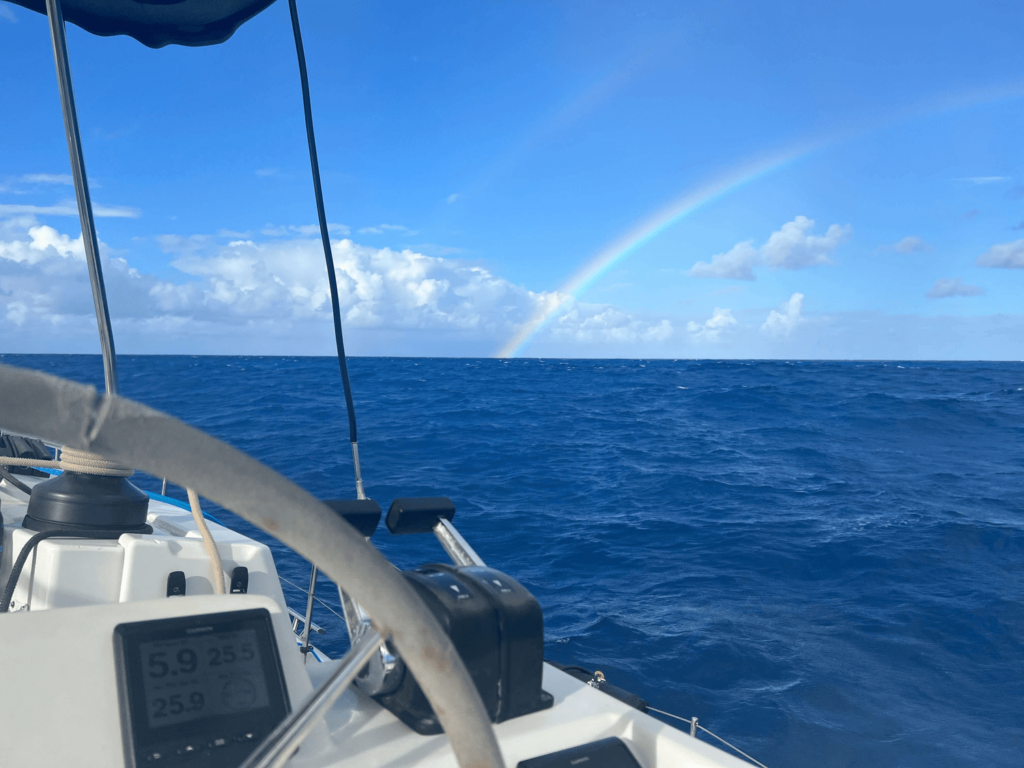
An Atlantic crossing is fundamentally different from one of our regular sailing cruises. There are no daily anchorages, restaurant visits or opportunities to step ashore. Once the yacht leaves, the crew may spend two weeks or longer without seeing land.
Everyone aboard becomes part of daily life on the yacht. Depending on experience and the skipper’s instructions, this can include keeping watch, helping with sails, preparing meals, maintaining shared spaces and supporting the routines that keep the yacht moving safely across the ocean.
A typical westbound crossing starts in the Canary Islands and continues towards Cape Verde before following the trade-wind route across the Atlantic to the Caribbean.
The complete journey from the Canary Islands commonly takes approximately three weeks, including a possible stop in Cape Verde. Starting in Cape Verde can reduce the open-ocean passage to approximately two weeks.
These are estimates rather than fixed schedules. The departure port, stopovers, Caribbean arrival destination and duration depend on the yacht, wind, weather and operational plan for each individual crossing.
Departing from the Canary Islands, we sail south towards Cape Verde—a passage of approximately seven days, depending on the wind and sea conditions. After arriving, there may be time to experience the islands’ distinctive culture and prepare the yacht for the main ocean passage.
Following a stop of around two days, we leave land behind and set course for the Caribbean. The Atlantic passage to St Lucia usually takes approximately two weeks, during which life settles into the natural rhythm of watches, shared responsibilities and changing conditions at sea. Spectacular sunrises, star-filled nights and an uninterrupted horizon make this the defining stage of the journey.
All timings and stopovers remain subject to weather, safety considerations and the final operational plan.
After approximately three weeks at sea, reaching Grenada marks an unforgettable end to the Atlantic passage. The first sight of its green coastline is a powerful moment after days surrounded only by open water and endless horizons.
Warm Caribbean weather, colourful island communities and Grenada’s relaxed atmosphere welcome you back to life on land. Exact arrival times remain dependent on the wind, weather and progress of the yacht.
A Different Way to Sail With Us
You do not need to cross an ocean to become part of life aboard. Join one of our sailing cruises in the Caribbean or the Mediterranean, take the helm, learn along the way or simply relax while discovering beautiful islands and remote anchorages.
November is a traditional period for westbound Atlantic crossings, as tropical activity generally begins to decrease and the seasonal trade-wind pattern becomes more established. However, conditions can vary considerably, and every departure remains subject to careful weather and route planning.
The passage normally follows the northeast trade winds west towards the Caribbean. When established, these winds can provide favourable sailing conditions for much of the crossing, but their strength and direction are never guaranteed. The skipper continuously monitors the forecasts and adapts the departure timing and route to the conditions encountered.
Sometimes known as the “Barefoot Route,” this classic southern passage leads from the Canary Islands towards Cape Verde before following the trade winds west across the Atlantic to the Caribbean. The journey takes you steadily into warmer latitudes, where life settles into the natural rhythm of the ocean. Changing winds, open-water sailing and the occasional calm all become part of an unforgettable adventure. And make the moment you finally reach the Caribbean even more rewarding.
You are not expected to arrive as a professional sailor, but you should be prepared to participate.
Under the skipper’s direction, guests may have opportunities to:
keep day and night watches
assist with sail handling
take the helm
learn basic navigation and weather observation
help prepare meals
contribute to everyday responsibilities aboard
gain practical experience of an offshore passage
The skipper remains responsible for the yacht and decides which tasks are appropriate for each person and each situation.
An Atlantic crossing is far more than a sailing journey. It is an opportunity to leave everyday life behind, experience the vastness of the open ocean and discover what you are capable of. You return not only with thousands of nautical miles behind you, but with memories and stories that will stay with you for a lifetime.
Life Across the Atlantic
Weeks on the open ocean change your perception of time, distance and everyday life. These are some of the experiences that make reaching the Caribbean under sail so extraordinary.
As the yacht travels west, the time gradually shifts. By the time you reach the Caribbean, you may have adjusted the clocks by approximately four or five hours.
After potentially two weeks without seeing land, the first Caribbean island on the horizon becomes an emotional and unforgettable moment for everyone aboard.
Far from artificial light, the stars stretch from horizon to horizon. Night watches offer a completely different perspective on the ocean and the sky above it.
Flying fish frequently appear around the yacht and may occasionally land on deck. Dolphins, seabirds and other marine life may also accompany parts of the passage.
Watches, meals, weather and the movement of the yacht replace the usual demands of daily life. Time becomes simpler and every day is shaped by the ocean.
Crossing the Atlantic requires patience, teamwork and adaptability. Reaching the Caribbean under sail is an achievement and a story that remains with you for life.
Atlantic crossings cannot currently be booked directly. Send us an enquiry and tell us why you would like to become part of a future ocean-going crew.
Enquire About a Future Crossing
Your Atlantic Crossing includes all essentials for a comfortable and adventurous journey:
Your crossing can begin from either the Canary Islands or Cape Verde:
The duration of the crossing depends on the starting location and the wind conditions:
No prior sailing experience is required! This trip is designed for everyone, from beginners to seasoned sailors:
Seasickness is common in the first few days as you adjust to the boat’s movement. However, most people adapt quickly and can enjoy the experience:
Expect to spend around 2 weeks without sight of land, though this can vary depending on conditions and pace. Some crossings may take a few extra days.
Don´t hesitate to contact us directly. We are pleased to answer your questions!
 English
  Español
  Deutsch