
DISCOVER UNFORGETTABLE CRUISING DESTINATIONS WORLDWIDE
A wingfoil holiday can take at least two very different forms. You can stay in a hotel or apartment near one established spot, or you can live aboard a sailing catamaran and travel between different islands and riding areas.
Neither option is automatically better.
A land-based wingfoil holiday normally offers more personal space, a predictable daily routine and convenient access to a local wingfoil school or rental centre. A wingfoil cruise offers mobility, access to remote locations and the possibility of experiencing several types of wind and water conditions during one trip.
The right choice depends on your riding level, the experience you want and how comfortable you are with life at sea.
The Short Answer
Choose a land-based wingfoil holiday if you want to concentrate on one location, require regular beginner lessons, prefer a larger room or want complete independence over your daily schedule.
Choose a wingfoil cruise if you can already ride independently, enjoy discovering new places and want the yacht to become your accommodation, transport and support base throughout the journey.
Beginners can join selected Ocean Ad-Ventures cruises when a suitable lesson package has been arranged in advance. However, not every itinerary or destination is appropriate for someone who is still learning. Your current level should always be discussed honestly before booking.
The practical differences become clearer when you compare the questions that matter during an actual wingfoil holiday.
| The real question | Wingfoil cruise with Ocean Ad-Ventures | Land-based wingfoil holiday |
|---|---|---|
| What if the wind is not good? | The yacht gives the crew the option to adapt the route and look for the most suitable available conditions. Safety, distance, anchorages and the overall itinerary still determine what is possible. | You remain based at your chosen spot. Reaching different conditions may require a rental car, transfer or additional planning. |
| Can a complete beginner join? | Yes, on selected cruises and destinations when a suitable lesson package has been arranged before departure. Not every itinerary is appropriate for beginner training. | Yes. A permanent school and a familiar training area can make a land-based holiday especially practical for complete beginners. |
| Do I need to bring my own equipment? | You can bring your own setup or arrange optional DUOTONE rental equipment in advance. Rental equipment is not automatically included in the cruise price. | You can bring your own equipment or rent locally when a suitable watersports centre is available at the destination. |
| What support is available on the water? | The crew briefs riders about each new location and provides agreed supervision and support. The exact arrangement depends on the destination, session, rider level and package booked. | Support varies considerably. Some centres provide instruction, guiding or rescue cover, while independent beach spots may provide none. |
| What is included in the price? | Accommodation aboard, full-board meals, non-alcoholic drinks and normal yacht-related costs are included. Flights, airport transfers, alcohol, lessons and rental equipment may be separate. | Accommodation, meals, transfers, lessons and equipment rental may be packaged together or booked and paid for separately. |
| What if my partner does not wingfoil? | Sailing, swimming, snorkelling, island visits and life aboard are part of the experience. The cruise works best when your partner also enjoys the idea of sailing and exploring. | Hotels and resorts may offer more independent facilities and activities, depending on the destination and accommodation. |
| How much personal space will I have? | You have a private cabin and share the indoor and outdoor living areas with a small group of guests and crew. | A hotel room or apartment normally provides more space, privacy and independence. |
| Could seasickness be an issue? | It can be, particularly during open-water passages. The route, weather and each guest's sensitivity all make a difference. | Sea motion is not normally part of the accommodation experience, although boat transfers or excursions may still be involved. |
| How should I compare the real cost? | Compare the complete package: accommodation, meals, sailing between locations, yacht costs and included support. Add any optional lessons, rental equipment, flights and transfers. | Add the accommodation, meals, local transport, equipment rental, lessons and any boat support or organised downwinders you expect to use. |
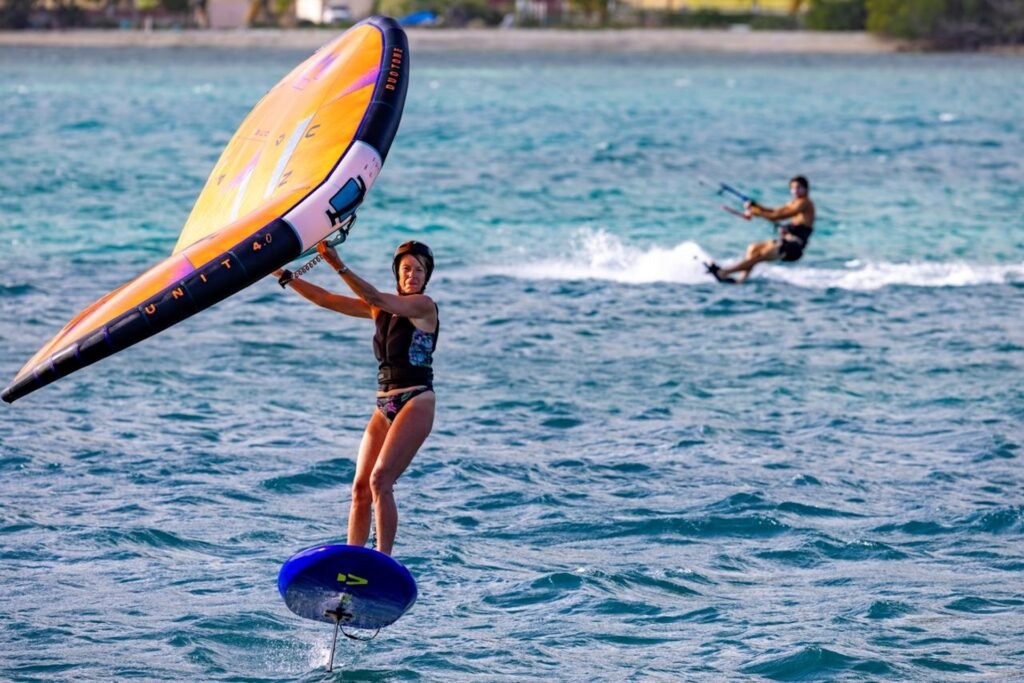


A wingfoil cruise is obviously not a conventional cruise on a large passenger ship. It is a small-group sailing journey aboard a catamaran, with a maximum of eight guests and a professional crew.
The yacht is your accommodation, dining area, equipment base and transport between riding locations. Instead of returning to the same beach every day, you may wake up beside a new island, anchorage or lagoon.
The route is not simply a fixed list of stops. The captain considers the forecast and chooses the spots in accordance to the groups riding level and expectations.
This creates opportunities to explore a lot of different surrounding and spots, but it also requires flexibility from everyone on board.
A wingfoil cruise just provides a lot more options to adapt and therefore make the most out of any given trip.
The greatest difference between a yacht-based and a land-based holiday is mobility.
When you stay on land, the quality of your trip depends heavily on the conditions at the location you booked. You may be able to drive to another spot, but that usually means hiring a vehicle, loading equipment, researching access and organising the return journey.
On a cruise, the yacht moves with you. It can take the group between islands, protected bays, flat-water areas and more open locations. Some of these places are difficult or impossible to reach conveniently from land.
This mobility can also make downwinders possible. Rather than riding backwards and forwards in front of one beach, experienced wingfoilers may travel with the wind and swell while the yacht or support vessel follows the group.
The exact sessions always depend on the destination, conditions and riders involved.
A land-based holiday is often the stronger choice for complete beginners. Learning to wingfoil requires repetition. A permanent school can provide a familiar training area, regular lesson times and easy access to instructors, beginner boards and alternative equipment. Returning to the same spot also makes it easier to recognise local hazards and measure progress from one day to the next.
A hotel or apartment may also suit you better if you:
Want a larger room and more personal space
Prefer to decide independently when and where to eat
Want nightlife, childcare, a swimming pool or resort facilities
Need to work online for several hours every day
Are uncomfortable with sea motion
Prefer a fixed daily routine
Want to train intensely at one specific spot
Are travelling with family members who want completely separate activities
Staying on land does not make the holiday less adventurous. It simply places emphasis on one destination rather than the journey between several destinations.
Can foil upwind and return safely to the yacht
Enjoy riding in different wind and water conditions
Want access to quieter or boat-only locations
Are interested in island-to-island downwinders
Prefer a small group to a busy resort
Want accommodation, meals and transport between spots organised together
Enjoy sailing as part of the holiday
Are comfortable adapting the day to the conditions
Want to travel without organising a rental car or daily transfers
Like the idea of waking up beside the next riding area
The cruise is about more than collecting as many sessions as possible. Sailing, shared meals, quiet anchorages and discovering the islands are part of the experience.


The required level depends to a certain amount on the destination and itinerary.
Some cruising areas have sheltered water and straightforward access. Others involve open water, ocean swell, stronger wind or launches where independent equipment handling is important.
For many cruises, you should be able to:
Prepare and understand your equipment
Launch with the available assistance
Foil upwind with reasonable consistency
Control your direction and speed
Return to the yacht or agreed meeting point
Follow a safety briefing
Swim confidently in deep water
Selected Ocean Ad-Ventures cruises can accommodate beginners or progressing riders when the appropriate lesson or assistance package is booked before departure. Because not every destination is suitable for beginner training, you should speak with the crew before choosing a cruise.
Being honest about your level helps us recommend the right destination, itinerary and support.
Yes, but progression on a cruise feels different from training at a fixed school.
A land-based course often follows a structured programme in the same training area. A cruise gives you the opportunity to apply your skills in changing surroundings. During one journey, you may encounter sheltered water, light chop, rolling swell or longer open-water runs.
Optional coaching can focus on your individual goals, such as improving control, transitions, upwind ability or a particular manoeuvre. Progressing riders can also arrange additional assistance if they occasionally foil but are not yet consistently independent.
Lessons, coaching and support must be discussed before departure. They should not be assumed to be automatically included with every cruise.

Both types of holiday allow you to bring your own equipment or rent locally, but the logistics are different.
At a land-based centre, the available equipment remains at one location. This can provide access to a broad range of boards, wings and foils, depending on the centre.
On an Ocean Ad-Ventures cruise, optional DUOTONE rental packages can be arranged after your cruise booking has been confirmed. The crew can help select equipment appropriate for your size, level and expected conditions.
Bringing your own equipment is also possible, but yacht storage is different from hotel storage. Soft, collapsible luggage and sensible packing make life aboard considerably easier.
Before travelling, confirm:
Which wings, boards and foils are available
Whether a harness is included
What equipment insurance or damage protection applies
How your own board bag will be stored
Whether the available equipment suits your riding level
Which personal items you still need to bring

A modern sailing catamaran is comfortable, but it is not a hotel.
Guests stay in private cabins and share the indoor and outdoor living areas with a small group. A captain and chef take care of sailing, meals and life aboard, allowing guests to focus on the journey and time on the water.
The advantage is that everything travels with you. You unpack once, while the view outside changes as the yacht moves between islands.
The trade-off is space. Cabins and storage areas are smaller than most hotel rooms, and daily life is more communal. Everyone needs to be considerate about equipment, luggage, water use and shared areas.
For many guests, this small-group atmosphere becomes one of the best parts of the trip. For someone who wants complete privacy, it may be the main reason to choose a land-based holiday instead.
A non-wingfoiling partner can enjoy a cruise, but the experience should appeal to them independently of the sport.
Depending on the route, days can include sailing, swimming, snorkelling, paddleboarding, secluded beaches, island visits and time ashore. Quiet mornings, meals on deck and nights at anchor are important parts of yacht life.
However, a land-based resort usually offers more independent facilities and activities. A partner who wants a spa, organised entertainment, extensive shopping or the freedom to follow a completely separate schedule may prefer staying ashore.
The cruise works best when both people are attracted to the wider sailing and island experience, even if only one of them wingfoils.


The answer depends on what is included.
A land-based price may initially appear lower, but the complete cost can include:
Accommodation
Restaurant meals
Rental vehicle
Fuel and parking
Airport and spot transfers
Equipment rental
Lessons or guiding
Boat support
Excursions
A wingfoil cruise normally combines accommodation, full board, sailing between islands and yacht-related costs. Optional lessons, coaching and wingfoil rental are added separately. Flights, airport transfers, alcoholic drinks and personal expenses are not normally included.
The fairest comparison is therefore the total cost of the experience—not simply the price of a hotel room against the price of a cabin.
Before booking either type of holiday, ask yourself:
Can I already foil upwind and return independently?
Do I want structured beginner lessons or an adventure for an independent rider?
Would I rather explore several locations or study one spot in depth?
Am I comfortable living aboard a yacht?
How important are privacy, hotel facilities and independent activities?
Is my partner interested in sailing and island life?
Do I enjoy adapting plans to the weather?
Am I comfortable with open-water passages?
Do I want to bring my own equipment or rent?
What services and support are actually included in the quoted price?
The right choice depends on your riding level, the experience you want and how comfortable you are with life at sea.
Tell us your riding level, preferred destination and whether you need lessons or equipment. We will recommend a suitable cruise—or tell you honestly when a land-based holiday would be the better option.
 English
  Español
  Deutsch